Reporting starts at the meter, not the spreadsheet.
For years, corporate sustainability reporting has been treated more like an accounting exercise than an engineering one. ESG teams have relied on a fragmented patchwork of utility bills, vendor estimates, and manual spreadsheets to calculate carbon footprints and resource consumption. However, as regulatory frameworks like the CSRD and SEC climate disclosure rules tighten, the margin for error is disappearing.
In the modern enterprise, reporting starts at the meter, not the spreadsheet. To achieve true audibility, organisations must transition from high-level estimations to granular, real-time operational evidence.
The Risks of Manual Data Collection
Most infrastructure monitoring is still surprisingly analog. Energy usage, water consumption, and waste metrics are often locked behind physical gauges or disconnected displays. This creates several critical vulnerabilities for the enterprise:
- Data Latency: Many teams only see their performance metrics weeks after a billing cycle, making it impossible to adjust operations in real-time.
- Human Error: Manual data entry - moving figures from a clipboard to an Excel file, is a primary source of reporting inaccuracies.
- Lack of Traceability: Internal and external auditors require a clear line of sight from the final report back to the physical source. Spreadsheets rarely provide a verifiable audit trail.
AsTrack: Capturing the Source of Truth
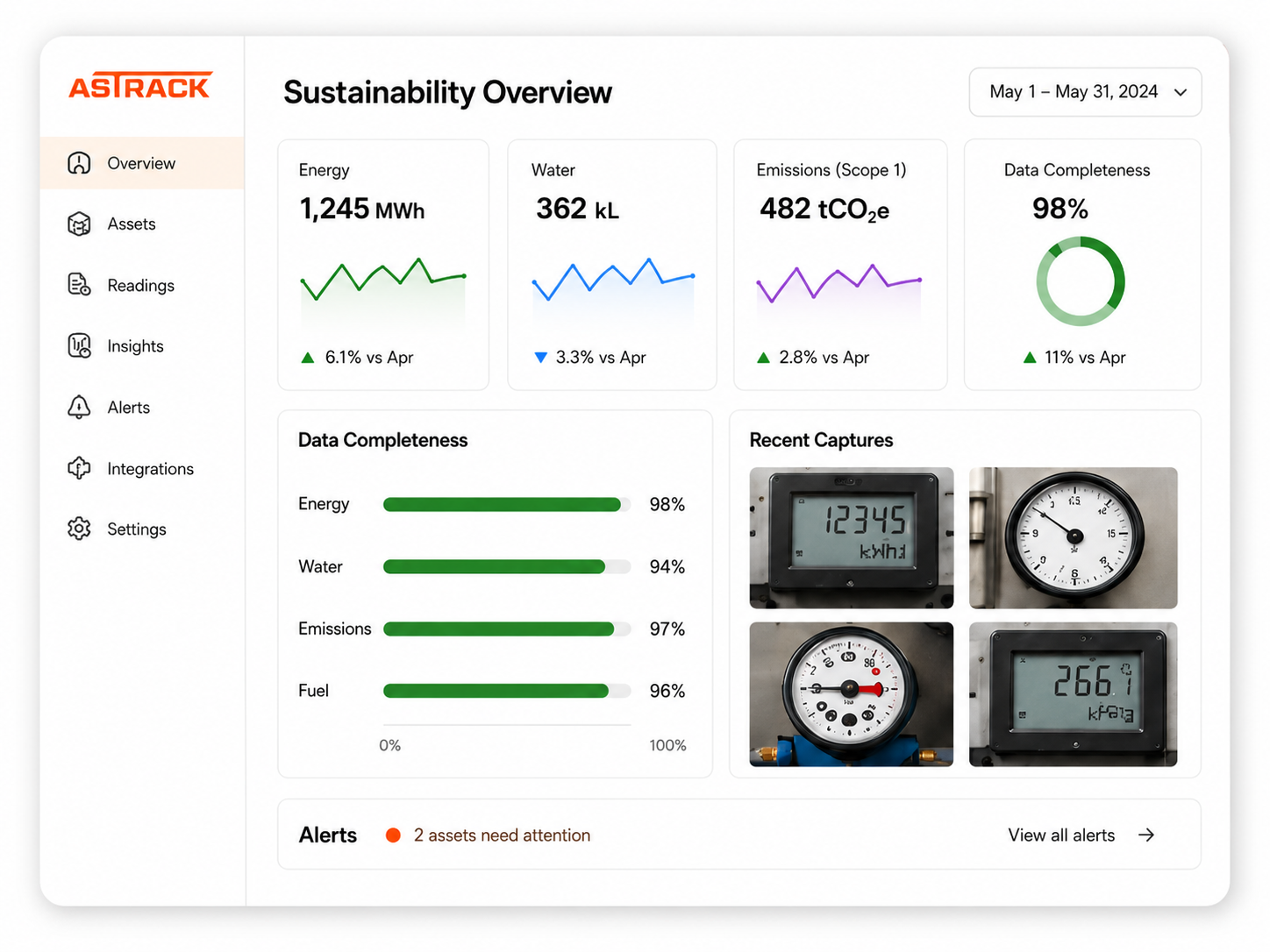
AsTrack’s approach to intelligent infrastructure flips the script on traditional reporting. Instead of waiting for secondary documentation, AsTrack integrates directly with your existing physical environment. By capturing actual readings from meters, gauges, and displays, even legacy equipment, we bridge the gap between the physical floor and the executive dashboard.
Digital Conversion of Legacy Assets
One of the biggest hurdles to real-time reporting is the presence of legacy infrastructure that lacks native cloud connectivity. AsTrack utilises computer vision and sensor integration to digitise these analog displays. This allows your team to extract high-fidelity data from equipment that was previously "dark."
Creating Operational Evidence
When reporting is backed by automated meter readings, it ceases to be an estimate and becomes operational evidence. AsTrack creates a timestamped, immutable record of every reading. This level of assurance is essential for passing rigorous third-party audits and maintaining stakeholder trust.
The Strategic Advantage of Real-Time Visibility
Moving reporting to the meter level isn't just about compliance; it’s about operational excellence. When you see your consumption in real-time, you can identify anomalies, leaks, or inefficiencies the moment they occur.
- Anomaly Detection: Sudden spikes in energy or water usage trigger immediate alerts, allowing for rapid remediation.
- Predictive Maintenance: Meter data often reveals mechanical degradation before a total failure occurs, saving significant capital expenditure.
- Dynamic Optimisation: Adjust infrastructure settings based on live load data rather than static schedules.
Conclusion: Building a Foundation of Integrity
The future of infrastructure monitoring belongs to those who prioritise data integrity at the source. Spreadsheets are a destination for data, not a reliable origin point. By leveraging AsTrack to capture direct meter readings, enterprise leaders can move past the era of "estimates" and step into a new standard of intelligent, traceable, and assured sustainability reporting.
It is time to stop guessing and start measuring. With AsTrack, your infrastructure speaks for itself.
Frequently asked questions
- What are the primary risks of using manual spreadsheets for sustainability reporting?
- Manual data collection leads to data latency, high rates of human error during entry, and a lack of traceability for auditors. These vulnerabilities make it difficult to meet tightening regulatory standards like CSRD and SEC rules.
- How does AsTrack handle data collection from legacy equipment without cloud connectivity?
- AsTrack utilizes computer vision and sensor integration to digitize analog displays and physical gauges. This technology extracts high-fidelity data from 'dark' legacy assets, bridging the gap between physical equipment and digital dashboards.
- Why is real-time meter data considered better than utility bill estimates?
- Real-time data provides operational evidence through timestamped, immutable records that are essential for third-party audits. Unlike delayed utility bills, live data allows for the immediate identification of anomalies, leaks, and inefficiencies.
- How can real-time infrastructure visibility improve operational excellence?
- It enables rapid remediation through anomaly detection alerts and supports predictive maintenance by revealing mechanical degradation before failure. Organizations can also use live load data to dynamically optimize infrastructure settings.