
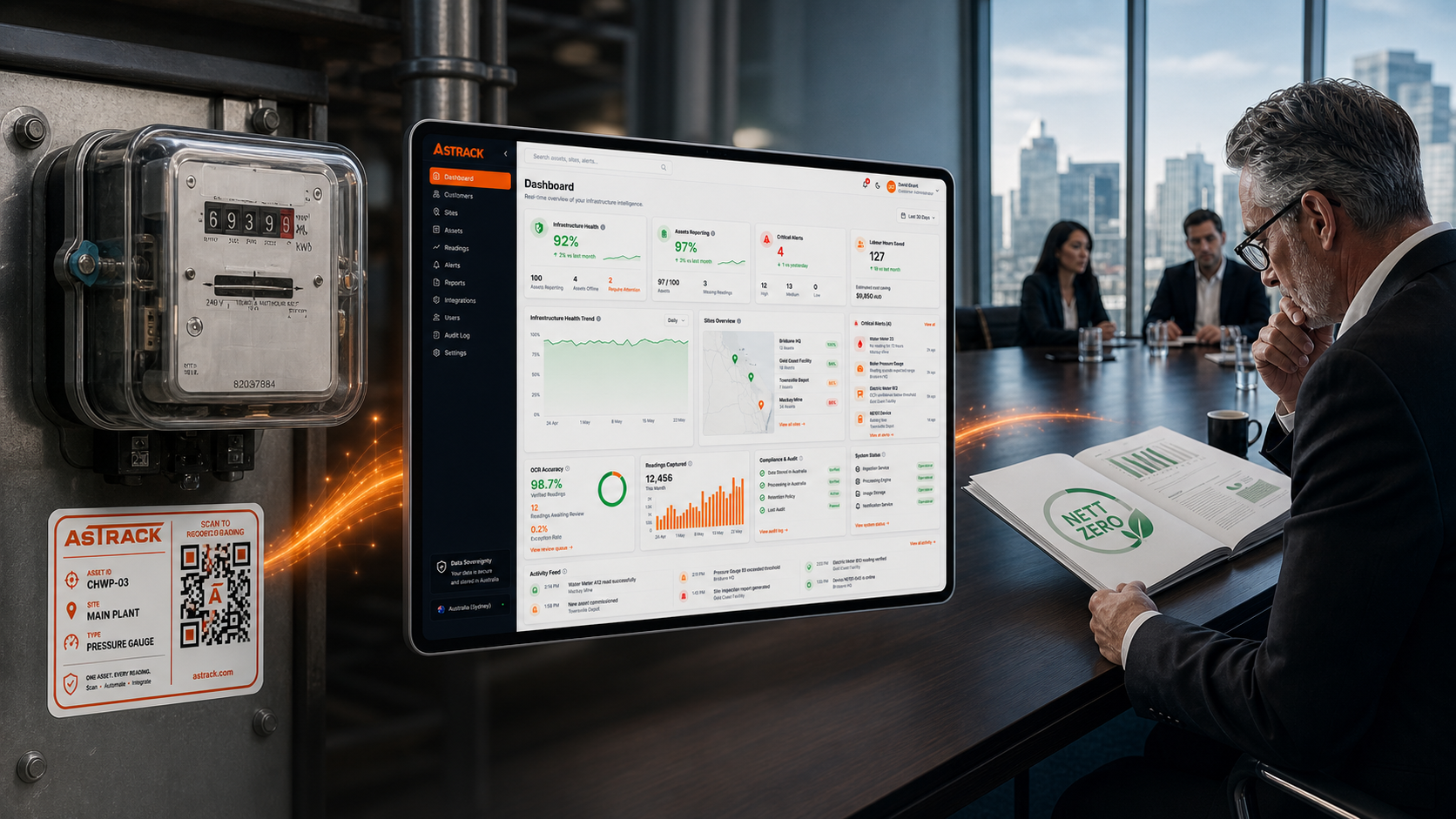
In the context of industrial operations, the term intelligent infrastructure often feels abstract. It is frequently marketed as a futuristic concept involving autonomous robots or fully automated facilities. For most operational leaders, however, the reality of intelligent infrastructure is much more practical. It is the transition from reactive maintenance and siloed data to a unified, real-time understanding of how assets are performing.
At its core, intelligent infrastructure is an ecosystem where physical assets and digital systems communicate seamlessly. It is not about a single piece of hardware. It is about the ability to capture, centralise, and interpret data from every corner of a facility, from the HVAC system to the handheld pump readings taken by a technician on the floor.
The three pillars of connectivity
To move from basic infrastructure to intelligent infrastructure, data must flow into a central platform. At AsTrack, we view this through three specific mechanisms for data capture.
1. Manual scan and capture
Not every asset warrants a million-dollar automation project. Much of the world's critical infrastructure still relies on human observation. Intelligent infrastructure brings these manual readings into the digital fold. By using mobile scanning and digital logs, clipboard-based data is digitised at the point of origin, ensuring it is no longer lost in a filing cabinet.
2. Direct automation
This involves the high-frequency data generated by modern machinery. PLCs, sensors, and built-in diagnostic tools provide a constant stream of information. In an intelligent system, this data is not trapped within the machine's local controller. It is pushed to a central platform where it can be viewed alongside other operational metrics.
3. System integration
Most facilities already use various software platforms, such as Building Management Systems (BMS) or specific energy monitors. The challenge is that these systems rarely talk to each other. Intelligent infrastructure bridges these gaps through integration, pulling data from legacy systems into a single source of truth.
Moving beyond data silos
The biggest obstacle to intelligent infrastructure is the silo. When maintenance teams have their own spreadsheets, the energy team has their own dashboard, and the operations manager has a different set of reports, the infrastructure remains 'dumb.' It is reactive because no one has the full picture.
An intelligent platform like AsTrack removes these silos. When every reading, whether it is a manual temperature check or an automated pressure sensor, sits on one platform, patterns emerge. You can see how a slight drop in pressure on a Friday correlates with a spike in energy consumption over the weekend. This is the difference between simply having data and having intelligence.
The benefits of a unified view
Transitioning to an intelligent model provides immediate operational advantages:
- Reduced downtime: By monitoring trends across all assets, teams can identify potential failures before they lead to an outage.
- Accurate reporting: Digital logs provide an immutable audit trail for compliance and safety standards, removing the risk of human error in transcription.
- Optimised resources: Technicians spend less time chasing data across different systems and more time performing actual maintenance.
- Better decision making: Capital expenditure decisions can be based on historical performance data rather than guesswork or manufacturer estimates.
The role of the platform
It is a common misconception that becoming 'intelligent' requires replacing every legacy asset with a new, connected version. This is rarely feasible. The more realistic path is to adopt a platform that can handle the diversity of a modern industrial site. The platform is the intelligence, not the sensor. It is the layer that translates raw numbers into operational insights.
Whether the data comes from an API, a wireless sensor, or a QR code on a pump, the goal remains the same: every reading on one platform.
Conclusion
Intelligent infrastructure is not a destination, but a method of operating. It is the commitment to eliminating blind spots and ensuring that no piece of data lives in isolation. By unifying manual scans, automated feeds, and system integrations, industrial operators can move away from the chaos of spreadsheets and toward a clear, real-time view of their entire estate.
Frequently asked questions
- What is the definition of intelligent infrastructure in modern operations?
- Intelligent infrastructure is a practical ecosystem where physical assets and digital systems communicate seamlessly, moving operations from reactive maintenance to a unified, real-time understanding of asset performance. It involves capturing, centralizing, and interpreting data from every corner of a facility rather than relying on a single piece of hardware.
- What are the three mechanisms for data capture in intelligent infrastructure?
- The three pillars are manual scan and capture for human-observed data, direct automation from high-frequency machinery sensors, and system integration that pulls data from existing software platforms like Building Management Systems.
- Do I need to replace all my legacy equipment to create an intelligent facility?
- No, you do not need to replace every legacy asset. A realistic path to intelligent infrastructure involves adopting a platform that integrates diverse data sources, such as APIs, wireless sensors, and manual QR code scans, to serve as the intelligence layer for existing equipment.
- What are the primary operational benefits of using a unified data platform?
- A unified platform reduces downtime by identifying potential failures early, provides accurate digital audit trails for compliance, and optimizes resources by allowing technicians to focus on maintenance instead of searching for data across silos.